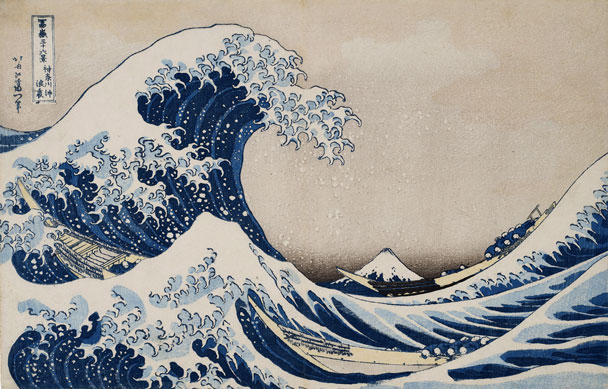
Meet Katsushika Hokusai, a heavyweight in Japanese art whose prints from the 19th century are still rocking the scene today. You might know him for his killer pieces like The Great Wave and Red Fuji, which basically put landscape woodblock prints on the map during Japan’s Edo period. Fast forward over two centuries, and these scenes are still captivating artists like Vincent van Gogh and Yoshitomo Nara.

Coming up on 19th March, Christie’s is giving you the chance to snag Hokusai’s legendary print series, 36 Views of Mount Fuji, as part of their Japanese and Korean Art event in New York. This set of 46 prints is the first complete one to hit the auction block in 20 years, showcasing Hokusai’s mad skills with ukiyo-e woodblock prints.

Now, let’s talk ukiyo-e prints. They were all about capturing the vibrant life of Edo (now Tokyo), showing off everything from bathhouses to theatres. Usually, kabuki actors were the stars, but Hokusai was like, “Nah, I’m doing my own thing.” According to Takaaki Murakami, Christie’s Head of Japanese Art, Hokusai was one of the pioneers who ditched the actors and focused on landscapes instead.
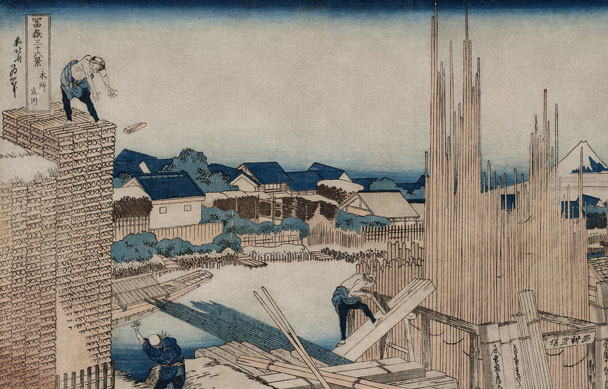
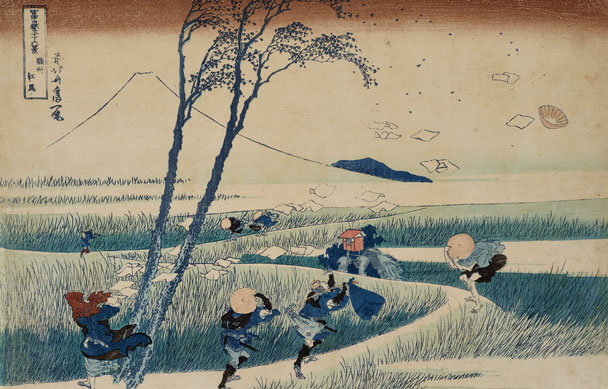
The impact of The Great Wave extends far beyond its original creation, influencing numerous artworks throughout the 20th century. Take Roy Lichtenstein’s Drowning Girl, for example, where a blue-haired figure is engulfed by silvery waves, or Andy Warhol’s Waves (After Hokusai), a direct homage to Hokusai’s masterpiece.

According to Lindsay Griffith, Head of Prints and Multiples at Christie’s, the traditions and techniques seen in Hokusai’s 36 Views of Mount Fuji continue to inspire contemporary artists. Yoshitomo Nara’s In the Floating World (Set of 16) is a prime illustration, with its familiar iconography and reinterpretation of domestic scenes. Griffith also highlights Helen Frankenthaler’s Tales of Genji woodblock print series for its radiant hues and soft colours, reminiscent of Hokusai’s work.

Griffith emphasises the significance of 36 Views of Mount Fuji in the realm of print media, citing The Great Wave as one of its most iconic images. She underscores the value of artists working in series, enabling them to explore various perspectives within a single body of work, a practice that remains profoundly meaningful in the art world.

error: Content is protected !!

Pin It on Pinterest

Share This