Titles occasionally help. Goodbye to the Bay of Naples, for example, does at least give a sense of place.
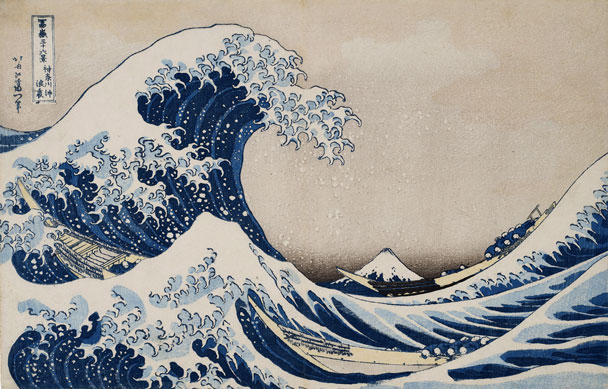
The Great Wave and Red Fuji
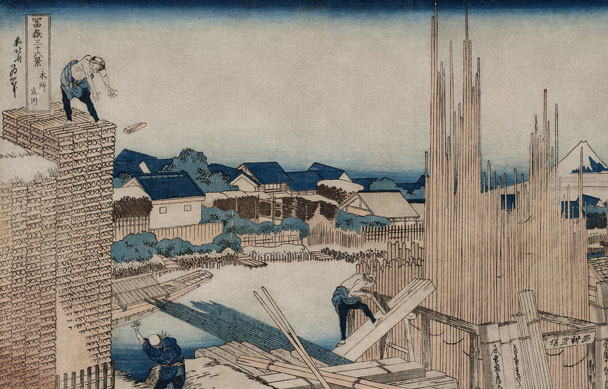
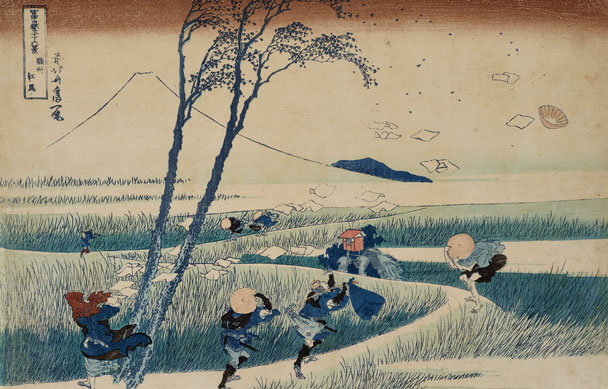


Impressionism, often associated solely with France, had a significant impact in the UK as well. While the typical perception of Impressionist art involves French scenes of 19th-century life, painted outdoors with rapid, fragmented brushstrokes capturing the ephemeral qualities of light, the reality is more complex. The presence of Impressionists in the UK has been largely overlooked, but their story is an important part of the movement’s history.
The origin of the Impressionist movement can be traced back to France, where artists like Claude Monet, Edgar Degas, and Camille Pissarro rebelled against traditional academic conventions and revolutionized the art world. However, it has long been believed that their experimental style did not find acceptance across the English Channel.
Victorian Britain is often remembered for its conservative artistic preferences, which revolved around narrative paintings with moral messages, exemplified by artists like Augustus Egg. When the prominent Impressionist dealer Paul Durand-Ruel organized an exhibition in London in 1874, it was met with a mix of outrage and confusion. A reviewer from The Times described the artworks as “coarse and ugly.”
However, things started to change from the 1880s onwards. British artists, inspired by their French counterparts, began venturing into rural areas to paint en plein air. Philip Wilson Steer went to Walberswick in Suffolk, George Clausen to Essex, and Stanhope Forbes and his associates established the Newlyn School in Cornwall. During this time, the British art scene was dominated by influential figures like Frederic, Lord Leighton, and Lawrence Alma-Tadema from the Royal Academy. However, a new generation of artists emerged, moving away from London, and while they were not a cohesive group, they shared enough traits to be recognized as British Impressionists.
Monet played a recurring role in the story of British Impressionism. He briefly sought refuge in London in 1870 during the Franco-Prussian War and revisited the city in 1899. While Monet found fascination in the River Thames near Westminster and painted it repeatedly, Pissarro drew inspiration from the south London suburb of Sydenham. Durand-Ruel maintained a gallery on Bond Street for many years, providing Londoners with a window into the developments of French art, even though sales were not significant.
According to the specialist, the French Impressionists undoubtedly left their influence, but the exchange was not one-sided. Several British painters, enthralled by the happenings in France, traveled there to study, often in art colonies in rural areas like Grez-sur-Loing, where Clausen and John Lavery ventured.
The difficulty of discussing British Impressionism as a unified movement has been further compounded. However, French Impressionism also lacked complete homogeneity, as exemplified by Degas, who preferred depicting urban and indoor scenes rather than landscapes painted en plein air. For many years, the prevailing view of British Impressionism drew inspiration from the early 20th-century artist and critic, Roger Fry, who argued that British art during the Victorian and Edwardian periods was inferior to that produced on the Continent.
According to Brown, a change began to occur in the 1970s, triggered by the publication of in-depth studies on artists like Steer and Sargent, which expanded our understanding of their artistic careers. This shift was further solidified by a significant exhibition at London’s Barbican Art Gallery in 1995, titled “Impressionism in Britain,” which played a pivotal role in establishing these British artists as important contributors to the art world.
Sir Alfred Munnings, known first and foremost as an equestrian painter, but who is sometimes referred to as an Impressionist.
Notable in this context is his, Honor and Hugh Vivian Smith a playful picture of two aristocratic children riding ponies one summer’s evening in Essex, characterised by its quick brushstrokes, thick impasto and uplifting colour.


American expat John Singer Sargent settled in the Cotswolds and produced one of the most beloved works in London’s Tate collection, “Carnation, Lily, Lily, Rose,” depicting two children lighting paper lanterns in a lush garden.
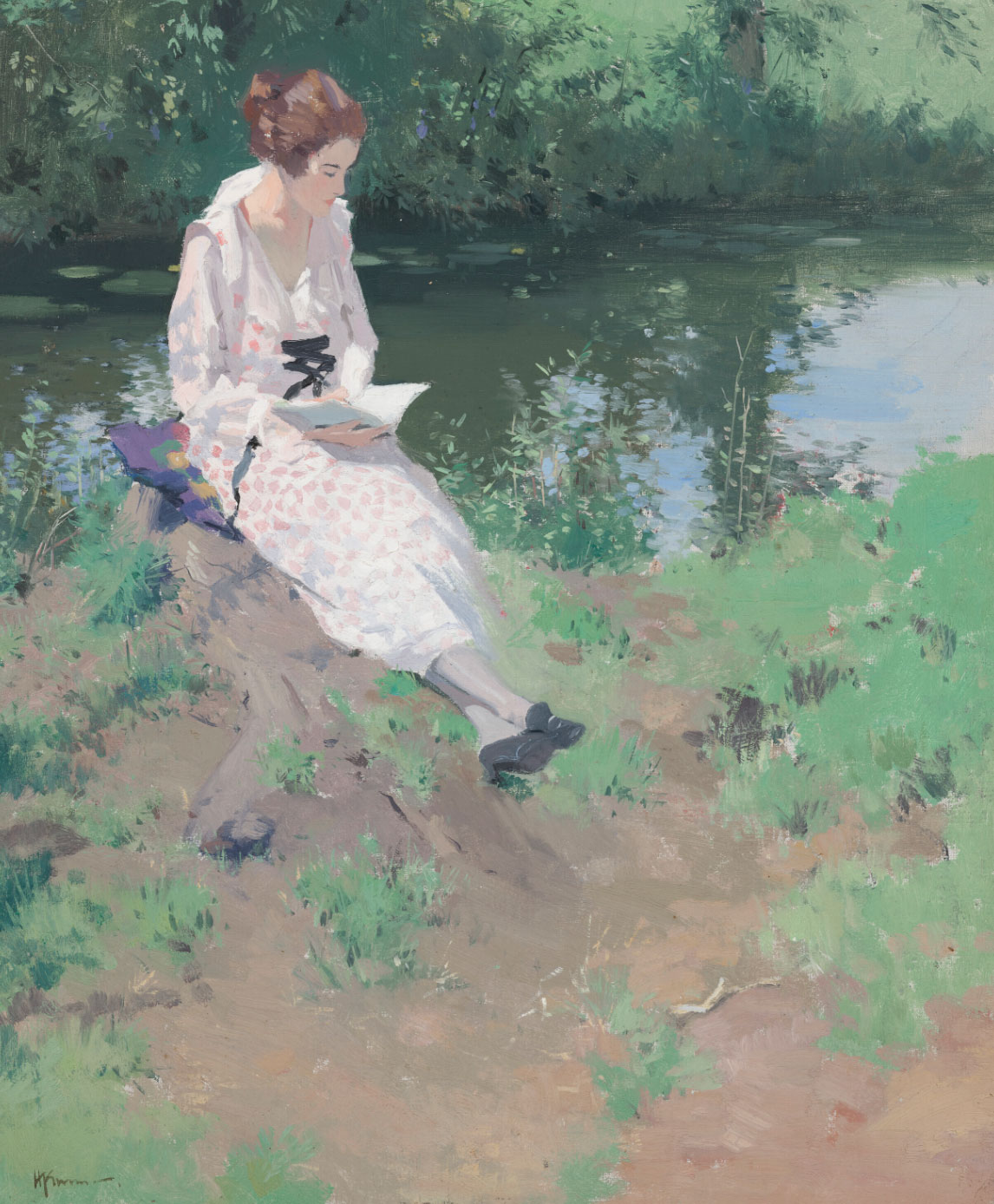
Another figure bridging the artistic connection between the two nations was John Singer Sargent. Trained in France, he relocated to the UK in 1885, just before turning 30. “Girl Reading by a Stream” (1888), painted in the Cotswolds village of Broadway, exemplifies Sargent’s mastery of Impressionistic ambiance and light. His loose brushwork skillfully captures the subtle tones of a setting sun on water. Like many British artists, Sargent did not strictly adhere to Impressionism but frequently employed its techniques.

‘I paint representational pictures of emotional situations.’
‘Painting is agony,’ Howard Hodgkin said on several occasions. He was known to pour himself a cocktail after completing each picture! The sense is of an artist who grappled constantly with his past, with the end result representing a kind of catharsis.
‘My entire life is in my paintings,’ he said, but viewers won’t know what episode in that life they’re looking at – especially given the lack of figurative references.
Titles occasionally help. Goodbye to the Bay of Naples, for example, does at least give a sense of place.

Goodbye to the Bay of Naples, 1980-82. Oil on wood.
An alternative way of engaging with his pictures is to forget their source and simply dive into them, promptly summoning memories or associations of one’s own.
As such, his works are loaded with feeling. This is reflected in its intense colour – and the vivacious sweeps, stabs and slashes of his brush, which often covered even a picture’s frame in paint. In many cases, the memories were painful; in some cases, they were positive.

Howard Hodgkin (1932-2017), The Spectator, 1984-87. Oil on wood.
One could describe him as a great user of colour, because the uses he found for it extended far beyond decoration. As he matured his work grew bolder and freer thenceforth, with more complex colours. It also appeared to move close to complete abstraction, devoid of any of the oblique figurative references of the recent past.
Hodgkin represented his country at the Venice Biennale in 1984. He won the Turner Prize in 1985. He was knighted in 1992, the same year that he designed a mural for the British Council’s new Indian headquarters in New Delhi. In 1995 he received a retrospective at the Metropolitan Museum of Art in New York.

They reached the finals amongst 4,338 children participating from 57 countries around the world. A total of 705 individual entries and 111 group entries were received spanning some 54 countries.The standard was incredibly high with the creativity, variety and environmental messaging hugely inspirational.
Global Canvas is DSWF’s annual children’s art competition for individuals and groups aged 4-16 years with age groups split 4-7 years, 8-11 years and 12-16 years.
The live online award ceremony took place on 26 April. It was hosted by David Shepherd Wildlife Foundation, DSWF, CEO Georgine Lamb.
The ceremony showcased the depth and breadth of talent by young artists from around the world.


Europe experienced a time of culural upheaval between 1886 and the start of the First World War in 1914. It was a period in which many European artists — most famously, Cezanne, Gauguin and Van Gogh — broke with established tradition, rejecting direct transcription of the world around them known as realism and naturalism. Cezanne, Gauguin and Van Gogh stood out among their peers with their unflinching commitment to the experimental and took risks with received conventions. Most tellingly, they created images where space is either severely constrained or eliminated altogether. Their influence spread in no small part because their work was exhibited widely across Europe, inspiring artist after artist who saw it.

Paul Gauguin, Vision of the Sermon (Jacob Wrestling with the Angel) (Vision du sermon: la lutte de Jacob avec l’ange), 1888. Oil on canvas. 72.2 × 91 cm.
Gauguin’s Vision of the Sermon in which a group of Breton women are separated by a huge diagonal tree-trunk from the biblical scene they’re imagining of Jacob wrestling an angel was a foundational painting for Post-Impressionism. Gauguin is asking: if the quality of art can no longer be judged by the degree to which a tree looks like a tree in the external world, what is the criterion for artistic excellence?


Playful Kitten
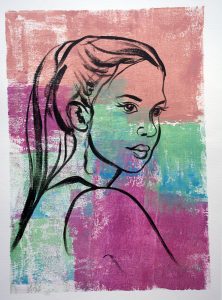
A Girl in Acrylic
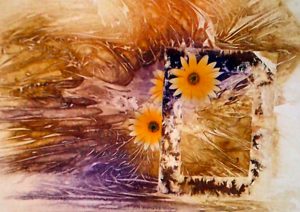
Please don't eat the daisies

A Girl (part three)
A Girl (part two)
A Girl (part one)

Painting the space around
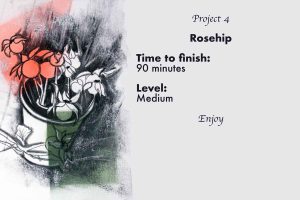
Rosehip

Sleeping beagles

Roses in red ink
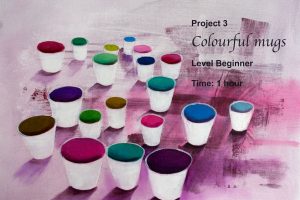
Colourful mugs

Dressing up
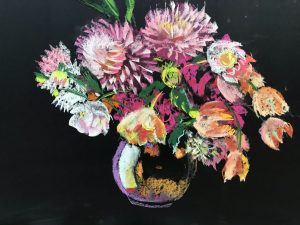
Drawing from the right side of the brain

Umbrella
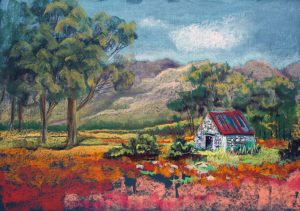
Landscaping in soft pastel